Education and Learning in Childhood
Education and Learning in Childhood - Empowering Children and their Families, Shaping the Future
On the Education and Learning in Childhood degree programme, you will prepare to work professionally as an early years educator with children and young people up to the age of 14 and their families. How should education, care and support be organised in childcare settings? How can effective learning processes be facilitated so that children can flourish? How can participation, children’s rights and inclusion be realised? How can families be supported in such a way that children develop well and their rights are safeguarded?
You will combine pedagogical, psychological and sociological knowledge with practical experience and develop a deep understanding of developmental processes, educational trajectories, and organisational, socio-political and social contexts.
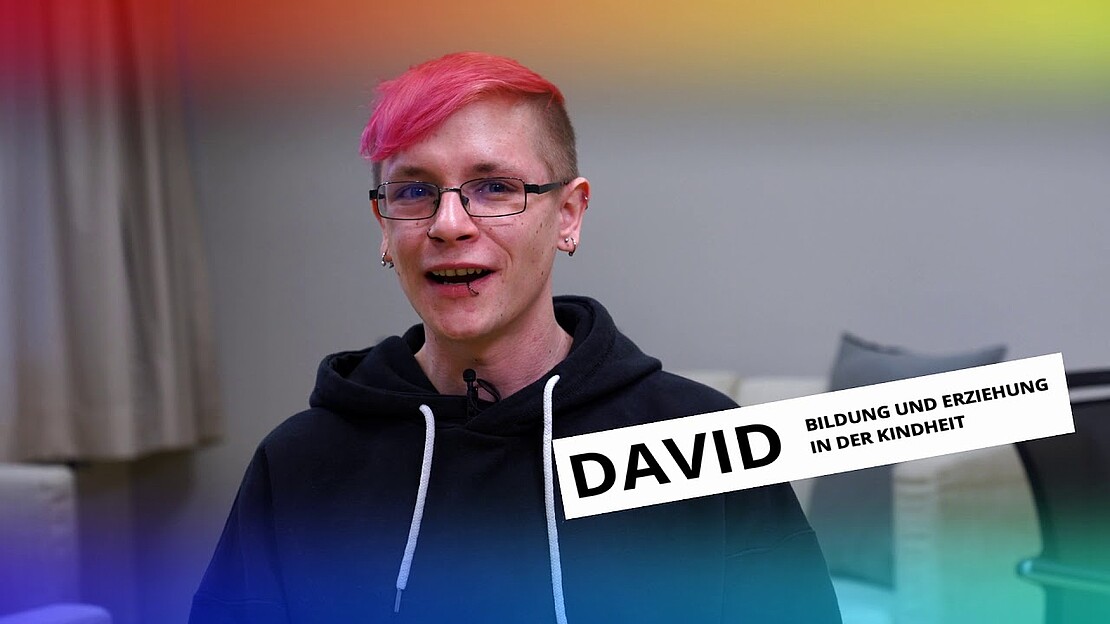
Your future career
................................................................................................................................................................................................
Your field of work is varied – and of great social importance.
As an expert in the education and upbringing of children and young people aged 0–14, you will work in educational and advisory settings such as nurseries, primary schools and other all-day educational facilities, family centres or early intervention programmes. You will design educational opportunities for children and support them in their development, whilst also advising other educational professionals and the children’s families.
Childhood education support systems, such as family education and youth welfare services, represent further potential areas of work.
Thanks to the academic expertise you have acquired, you are also able to develop concepts and support providers and organisations in quality development processes.
You can also work in specialist consultancy, further education and training, educational planning, evaluation or at universities.
Course content and structure
................................................................................................................................................................................................
You will begin by covering the fundamentals of educational science, psychology, social sciences, child protection, law and empirical research. Particular emphasis is placed on the observation of children and the evaluation and self-evaluation of work in educational and childcare settings.
From the fourth semester onwards, you will specialise in one of the following areas:
- Competence development in childhood
- The family as a developmental context
- Institutional development/management
Alongside your modules, from the first to the sixth semester you will gain practical experience in educational settings (180 hours per semester), supported by supervision and practical seminars.
In the seventh semester, you will write your Bachelor’s thesis, often with a strong link to professional practice.
Your interests and skills
................................................................................................................................................................................................
Would you like to support children professionally, take on social responsibility and play an active role in shaping education? If so, you already meet key requirements for this degree programme.
The following are helpful:
- An interest in child development, educational processes and topics such as equal opportunities and social justice
- A passion for teamwork, communication and engaging with professionals, families and institutions
- An openness to academic, theory-based work, as well as to new insights from research and practice
- A willingness to reflect on and further develop your own pedagogical approach and attitude
- Good German language skills are essential – as is the ability to understand specialist literature in English, for example in seminars, on field trips or during international exchange programmes
During the degree programme, you will learn to recognise complex educational interrelationships, to design educational programmes professionally, and to actively support and protect children’s development in cooperation with their parents. If this appeals to you, you’ve come to the right place.
Admission requirements
................................................................................................................................................................................................
Did you complete your secondary education outside Germany?
- If you want to do your bachelor's degree in Germany, you need an academic qualification that corresponds to the German Abitur or Fachhochschulreife. Here you will find all the information for international prospective students.
- Please note that you must provide proof of German language skills at C1 level.
The following applies to all applicants:
- You are not required to have completed pre-course experience for this course.
Did you complete your secondary education in Germany?
You can apply directly for this course if you hold one of the following qualifications:
- Fachhochschulreife
- Allgemeine Hochschulreife
- Fachgebundene Hochschulreife (subject-specific HE entrance qualification)
- A similar qualification
You can find information about the selection process and the numerus clausus (NC) from the previous semester here: Applying for a Bachelor's degree course/Selection criteria
Application process
................................................................................................................................................................................................
We only accept online applications. Before applying, applicants must register with www.hochschulstart.de.
During the application period (for the winter semester: 1 June–15 July) you can find the online application and detailed information about the application process on the Applying for a Bachelor's degree course page.
International applicants are also required to apply during the application period.
To make the process easier for you, we have compiled a step-by-step checklist: International applicants
Questions about selecting a course, applications, admissions and degree courses
................................................................................................................................................................................................
Applications and admissions
Student Admissions and Registration Office (Studierendensekretariat)
Stiftstraße 69, 20099 Hamburg (ground floor)
T +49 40 21904 11770
studierendensekretariat (at) haw-hamburg (dot) de
Contact us with your questions about applications and admissions
The Information Point is open at the following times:
Monday–Thursday: 10:00 am–1:00 pm
Friday: closed
In-person office hours:
Monday+Tuesday: 11am-1pm, Thursday: 2:00 pm–4:00 pm
Telephone office hours:
Monday and Tuesday: 9:00 am–10:00 am, Thursday: 9am-11am
For general queries about HAW Hamburg degree courses and course choice
Student Counselling Team (Zentrale Studienberatung)
Stiftstraße 69, 1st floor, room 122
20099 Hamburg
T +49 40 21904 11990
Contact form
Office hours
Contact person for applicants with disabilities or chronic health conditions
Meike Butenob
Stiftstraße 69, Haus 3, room 37
T +49 40 21904 2778
inklusion (at) haw-hamburg (dot) de
Contact the department
................................................................................................................................................................................................
Specifically subject-related queries:
Prof. Dr. Daniela Ulber
Alexanderstraße 1
20099 Hamburg
T +49.40.21904-2254
daniela.ulber(@)haw-hamburg.de